Colorado winters create unique DUI risks and defenses. Snow and ice increase police stops for traction and equipment issues, roadside tests get less reliable on slick shoulders, evidential testing can be delayed by weather, and DMV deadlines still move fast. Colorado’s per se limit is 0.08, with a separate impaired driving offense below that threshold, and you generally have only seven days to request a DMV hearing after an Express Consent notice. This guide explains how cold weather affects stops, testing, and defense strategy so you can make smart decisions if you are stopped in winter.
Why winter leads to more DUI stops in Colorado 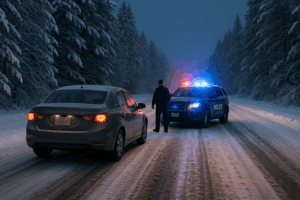
Snowy and icy conditions give officers more lawful reasons to initiate stops that are not about alcohol at all. Common winter triggers include:
• Traction or chain law noncompliance on I-70 and other corridors.
• Reduced visibility from snow-covered windshields or burned-out lights.
• Sliding through a stop line, driving too fast for conditions, or crawling far below the flow due to poor traction.
• Tires below required tread depth during an active Traction Law.
On mountain corridors, the Colorado Department of Transportation can activate the Passenger Vehicle Traction Law or the Passenger Vehicle Chain Law during storms. These rules require suitable tires, tread depth, or chains, and violation can prompt a stop that later becomes a DUI investigation.
Reasonable suspicion in winter
Drifting within a lane, tapping brakes, or a slow speed on packed snow may look like impairment on a summer night, yet it can also be normal winter driving. An experienced defense lawyer will scrutinize dash video, weather logs, and road condition reports to show that the driving was consistent with snow and ice rather than alcohol. This context can narrow or defeat the government’s claim that officers had reasonable suspicion for field testing.
Field sobriety tests on ice and in the cold
The three standardized field sobriety tests were validated under controlled conditions. In real life, the shoulder may be icy, sloped, rutted, windy, or poorly lit. Bulky winter boots, numb feet and fingers, and shivering can hurt balance and coordination. Officers are trained to consider surface, footwear, and weather when deciding whether and how to administer tests. If the tests were given on slick or uneven surfaces, your attorney can challenge the reliability of the results and the officer’s scoring.
Practical tip: If an officer asks you to perform roadside exercises, politely describe any footwear, injuries, or conditions that could affect balance and ask whether there is a safer, flatter, better-lit area. Your statements can help create a record that conditions, not alcohol, explained your performance.
Portable breath tests versus evidential testing
Roadside preliminary breath tests are screening tools. Evidential breath testing occurs later on an instrument maintained in a controlled environment. Fuel-cell breath-alcohol instruments are designed for accuracy, yet like any scientific device they require proper maintenance and operation. Defense experts may examine temperature controls, instrument records, and sample capture to challenge questionable results. Published research recognizes fuel-cell breath testing as reliable when operated correctly, which is why maintenance logs and operator steps matter so much in court.
How cold and weather can complicate evidence collection
Winter weather can add real-world complications that your defense can use to build reasonable doubt:
• Delays to the station for evidential breath testing due to road closures or crashes can affect the timeline. Colorado’s DMV focuses on whether you drove at 0.08 or more within two hours of driving during an Express Consent proceeding, so the state must prove the timing and accuracy of any alcohol number.
• Blood draws may be delayed by icy roads, limited medical availability, or prolonged transport. Accurate documentation of draw times and handling becomes even more important.
Colorado’s DUI and DWAI thresholds
Colorado has a “per se” DUI at 0.08 or more breath or blood alcohol within two hours of driving. Colorado also prosecutes impaired driving below 0.08 based on observed impairment. Winter conditions can make the state lean heavily on driving behavior and field testing, which is why challenging those observations matters in snow and ice cases.
Express Consent and the seven-day DMV clock
If you are arrested and either refuse breath or blood testing, or complete a breath test, you will typically receive an Express Consent Affidavit and Notice of Revocation. When the notice is served, you generally have up to seven days to request a hearing with the DMV. That deadline is short even in a blizzard. Do not wait to act.
Mountain driving and traction law stops
On the I-70 mountain corridor, CDOT’s Traction Law may require specific winter-rated tires with at least 3/16-inch tread, all-wheel or four-wheel drive meeting the standard, or chains or an approved traction device. Failing to meet those requirements can lead to a traffic stop that expands into a DUI investigation if the officer notes clues of impairment. Your lawyer can gather traction-law activation data, signage records, and tire documentation to contest the basis for the stop or limit the scope of evidence from it.
How winter conditions intersect with common defenses
Challenging reasonable suspicion. If the only “weaving” was drift in ruts or avoidance of ice patches, the stop may be vulnerable. Weather explains many cues officers list in reports.
Attacking field sobriety conditions. Document ice, slope, boots, and lighting. Cross-examination can show that the test setting strayed from training guidance and that scoring did not adjust for conditions.
Questioning alcohol number reliability. Evidence about instrument maintenance, timing in relation to driving, sample capture, and operator steps can be decisive. Weather-related delays can complicate retrograde extrapolation and the government’s two-hour proof in DMV hearings.
Exploring alternatives to jail and long-term fallout. A strong winter-conditions defense can influence plea discussions and sentencing arguments. It may also affect administrative outcomes such as ignition interlock requirements and license restraints.
What to do if you are stopped on a snowy night
Stay calm, keep both hands visible, and follow instructions. If you must retrieve documents, say where they are before reaching. If asked to exit, move slowly to avoid slipping.
Describe safety issues for roadside testing. Tell the officer if the shoulder is icy or sloped, if you are in heavy boots, or if you have injuries that affect balance. Asking for a safer location may help later.
Be mindful with statements. Short, polite answers are better than guesses about how much you had. You have the right to remain silent about potentially incriminating details.
Understand testing choices. Refusing a breath or blood test after arrest triggers its own license consequences under Express Consent. A speedy call to a qualified lawyer can help you understand options in the moment.
How a Colorado defense team builds your winter-weather case
A winter DUI case calls for a fact-heavy defense strategy:
• Weather evidence: historical temperature, snow, and wind; traction-law activation records; plow logs.
• Scene photography: slope, surface, and lighting where tests occurred.
• Vehicle proof: tire type and tread depth, functioning defrosters and lights, windshield scraping evidence.
• Instrument and lab records: maintenance, operator certifications, timing and chain of custody.
• Video: body-worn and dash video to show careful driving in snow rather than impairment.
When you should call a lawyer
If you received an Express Consent notice, the seven-day hearing deadline is already running. If you were stopped on I-70 or another corridor during a traction or chain law event, your case may hinge on road rules that have nothing to do with alcohol. A Colorado DUI lawyer who understands winter conditions can protect deadlines, gather records fast, and present weather-based defenses that resonate with prosecutors, hearing officers, and judges.
Helpful resources for next steps on this site
If you want a deeper dive into Colorado DUI basics and next steps, read our frequently asked questions for quick answers and timelines. Also see our guidance on what not to do during a stop and how DUI costs add up in Colorado. These pages can help you understand process, penalties, and choices:
Colorado DUI FAQs: https://www.hebetsmccallin.com/frequently-asked-questions-about-duis/
What not to do when stopped for a DUI: https://www.hebetsmccallin.com/what-not-to-do-when-stopped-for-a-dui/
How much does a DUI cost: https://www.hebetsmccallin.com/how-much-does-a-dui-cost/
Do you lose your license for a DUI: https://www.hebetsmccallin.com/do-you-lose-your-license-for-a-dui-five-things-to-know/
Top tips from the best DUI lawyers: https://www.hebetsmccallin.com/top-tips-from-the-best-dui-lawyers/
If a winter stop led to DUI charges in Denver or anywhere in Colorado, speak with a team that handles these cases year-round. Hebets & McCallin P.C. can move quickly on your DMV hearing, preserve video and weather records, and build a defense that accounts for snow, ice, and cold. Contact us today for a confidential consultation.
Disclaimer
This article is for informational purposes only and is not legal advice. Consult an attorney about your specific situation.