
August changes Colorado traffic patterns, not the legal standard for DUI or DWAI. School buses return, posted school-zone restrictions become part of daily travel again, teen drivers rejoin morning traffic, and pickup lines create more chances for stops involving speed, yielding, distracted driving, unsafe turns, or equipment issues. Late-August events and Labor Day travel can also bring greater attention to impaired driving across Denver and nearby Colorado communities.
A traffic stop near a school is not proof of impairment. The officer must still have a lawful basis for the stop, and the prosecution must still prove every required element of any DUI or DWAI charge. The officer’s observations, body-camera footage, roadside testing, chemical testing, statements, and stated reason for the stop may all become evidence.
Hebets & McCallin P.C. represents drivers facing DUI, DWAI, drug-related driving allegations, underage drinking and driving matters, and related traffic charges throughout Denver and nearby areas.
A school-zone stop is not proof of impairment. The reason for the stop and every step that follows still require case-specific review.






What Changes When Colorado Schools Return in August? 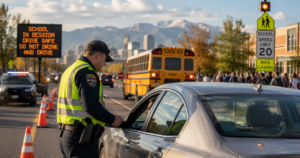
Colorado DUI law does not become stricter when the school year begins. The driving environment changes.
Routes that felt quiet in July may suddenly include school buses, crossing guards, children on bicycles, parents making unfamiliar turns, and long lines near school entrances. Morning congestion may begin earlier than a typical commute. Afternoon dismissal may overlap with work traffic, deliveries, practices, and other school activities.
Local law enforcement agencies may assign officers to school zones, monitor posted speed restrictions, watch crosswalks, and enforce school bus laws. An officer who stops a vehicle for a traffic violation may expand the contact into a DUI investigation after claiming to observe an odor of alcohol or marijuana, unusual speech, red or watery eyes, delayed responses, open containers, or other signs of possible impairment.
August creates more contact points between drivers and law enforcement. It does not reduce the prosecution’s burden of proof.
School-Zone and School Bus Stops Can Lead to DUI Investigations
A driver may be stopped for conduct unrelated to alcohol or drugs. Common reasons can include:
- Driving above a posted school-zone speed limit when the restriction applies
• Failing to stop for a school bus displaying required red signals
• Failing to yield to a pedestrian or crossing guard
• Holding or using a phone while driving
• Making an unsafe turn or lane change near a pickup line
• Rolling through a stop sign
• Following too closely in stop-and-go traffic
• Driving with an expired plate, broken light, or other equipment issue
School-zone rules can depend on the wording of the sign, the stated hours, flashing signals, and surrounding conditions. Drivers should read each sign rather than assume that every school zone works the same way.
After the stop, the officer may ask where the driver is coming from, whether the driver consumed alcohol, or whether the driver used marijuana, prescription medication, or another substance. The officer may request roadside exercises or a preliminary breath test.
A roadside preliminary breath test is different from an evidential breath or blood test requested after an arrest. Refusing an evidential chemical test can create separate driver’s license consequences under Colorado’s express-consent process.
Drivers can remain calm, provide the license, registration, and insurance information required by law, and avoid guessing about alcohol levels or giving a long roadside explanation. More information about common mistakes during a DUI stop is available at:
https://www.hebetsmccallin.com/what-not-to-do-when-stopped-for-a-dui/
Just like anything else, practice leads to proficiency. With over 35 years of combined experience, we've gathered extensive knowledge inside and outside the courtroom.

Colorado DUI Enforcement Does Not Depend on a 0.08 Result Alone
A breath or blood result below 0.08 does not automatically end a Colorado impaired-driving case.
Colorado recognizes both DUI and DWAI. A 0.08 blood alcohol concentration can support a DUI charge, while evidence of impairment may support a charge at a lower result. Alcohol, marijuana, prescription medication, illegal drugs, or a combination of substances may be part of the allegation.
Police and prosecutors may rely on several forms of evidence, including:
- Driving behavior before the stop
• Statements made during the investigation
• Physical observations recorded by the officer
• Performance on roadside exercises
• Preliminary breath test results
• Evidential breath or blood test results
• Body-camera and dash-camera footage
• Witness accounts and crash evidence
The difference between DUI and DWAI can affect possible penalties, driver’s license concerns, and defense strategy. The firm explains those differences at:
Back-to-School Traffic Can Affect the Evidence
August traffic can produce driving behavior that an officer interprets as impairment even when another explanation exists. A parent may brake suddenly after missing a new school entrance. A teen driver may hesitate at an unfamiliar intersection. A driver may appear tired after an earlier morning schedule. Sun glare, construction, anxiety, medical conditions, footwear, uneven pavement, and confusing instructions may affect what an officer observes.
These facts do not automatically defeat a charge. They may become relevant when an attorney compares the police report with body-camera footage, dash-camera video, traffic-camera recordings, witness accounts, school schedules, road conditions, and the timing of the stop.
Roadside sobriety exercises also require case-specific review. Performance may be affected by injuries, balance conditions, age, fatigue, language barriers, traffic noise, flashing lights, weather, or an unsuitable testing surface. A police report is one source of evidence, not the complete record.
Collin McCallin performed EXCELLENTLY with my case. He kept in consistent contact with me throughout and showed diligence and extreme care for what I was dealing with. He worked effectively with the district attorney to resolve my case, and I could not be more pleased with the work. Thanks again! - Tim W Working with Russell lifted a huge weight off of our shoulders and allowed my husband and me to get back to living our lives knowing we were in good hands. Russell is truly a genuine and caring person and my husband and I will forever be grateful for the hard work, empathy, and support Russell gave us with my case. His persistence and determination resulted in a full dismissal of all of the charges!" - AnonymousExcellent Attorney
The Best Choice
Underage Drivers Face Separate Alcohol Rules
August places more high school and college-age drivers on Colorado roads. New schedules, sports practices, campus events, move-in gatherings, and unfamiliar routes can increase contact with law enforcement.
Colorado applies a lower alcohol threshold to drivers younger than 21. A separate underage drinking and driving matter may arise at a blood alcohol concentration of 0.02 or higher, even when the result is below the adult per se DUI threshold. Higher results or evidence of impairment can lead to other charges.
An underage case may affect driving privileges and may create concerns involving school discipline, athletics, employment, scholarships, housing, or professional plans. Students and families should treat the allegation as a legal matter, not as an ordinary traffic ticket.
More information about age-specific DUI issues is available at:
https://www.hebetsmccallin.com/denver-underage-dui-lawyers/
What Happens After an August DUI Arrest?
A Colorado DUI arrest may create two separate proceedings. The criminal case moves through the court system. A driver’s license matter may proceed through the Colorado Division of Motor Vehicles. The two proceedings follow different rules, address different issues, and may involve separate deadlines.
After release, preserve every document provided by the officer, jail, court, testing facility, or DMV. Write down the timeline while the details remain fresh, including:
- Where the stop occurred
• What the officer said about the reason for the stop
• Which roadside exercises were requested
• Whether a preliminary breath test was offered
• Whether an evidential breath or blood test occurred
• Whether the driver refused a chemical test
• Whether passengers or other witnesses were present
• Which documents the officer collected or returned
Useful evidence may include:
- Body-camera and dash-camera footage
• Dispatch records and 911 calls
• Breath-testing maintenance and calibration records
• Blood sample collection and laboratory records
• Photographs or video of the testing location
• Receipts, phone records, and rideshare history
• School-zone signs, signal timing, and road configuration
• Medical records that may explain balance, speech, or eye appearance
• Statements from passengers or other witnesses
Do not assume that the court date is the only deadline. A refusal or qualifying chemical test result can trigger a separate DMV process that requires prompt attention. The firm’s DMV hearing page explains the separate license proceeding:
https://www.hebetsmccallin.com/denver-dmv-hearing-lawyers/
The firm’s main Denver DUI page provides more information about the criminal process and defense review:
https://www.hebetsmccallin.com/denver-dui-lawyers/
Magnus’ Law Takes Effect on August 12, 2026
Colorado enacted Senate Bill 26-132, known as Magnus’ Law, on June 4, 2026. The law takes effect on August 12, 2026.
When a driver is involved in a collision that results in death or suspected serious bodily injury, the law generally requires a law enforcement officer to offer the driver an opportunity to take a voluntary preliminary alcohol breath screening test. The officer must advise the driver that the test may be accepted or refused.
This roadside screening is voluntary. It is different from evidential chemical testing that may be requested after an arrest under Colorado’s express-consent law. The new requirement applies to qualifying serious crashes, not only to crashes in school zones.
The official bill summary is available at:
https://leg.colorado.gov/bills/sb26-132
The timing matters for an August article. Crashes before August 12, 2026, occur before the new law’s effective date. Qualifying crashes on or after August 12, 2026, fall under the new screening-offer requirement.
How a Colorado DUI Defense Attorney Reviews the Stop
A defense attorney can examine whether the officer had a lawful reason to stop the vehicle and whether each later stage of the investigation was supported by the facts and the law.
The review may address:
- Whether the alleged traffic violation appears on video
• Whether school-zone signs and speed restrictions were active and visible
• Whether the officer accurately described the driver’s speech, eyes, balance, and responses
• Whether roadside exercises were explained and administered properly
• Whether statements were obtained lawfully
• Whether breath or blood testing followed required procedures
• Whether medical or environmental factors explain the observations
• Whether laboratory records support the reported result
• Whether evidence was preserved
• Whether court and DMV deadlines were protected
A first-offense alcohol case, an underage case, a marijuana allegation, a refusal, and an injury crash may require different defense strategies. The strongest review begins with the specific facts, records, and deadlines in the individual case.
Planning for Safer August Driving
Drivers can reduce crash risk and police contact by adjusting their routine before school starts:
- Leave earlier and expect delays near schools.
• Read posted school-zone signs and watch for flashing signals.
• Put the phone away before entering traffic.
• Watch for crossing guards, buses, bicycles, pedestrians, and new pickup patterns.
• Arrange a sober ride before attending an event where alcohol or marijuana may be used.
• Do not rely on coffee, food, or a short wait to decide whether driving is safe.
• Keep registration, insurance, lights, and license plates current.
• Give teen drivers time to practice new routes before the first school day.
A transportation plan made before an event is more reliable than trying to estimate impairment afterward.
Speak With a Colorado DUI Defense Attorney
An August traffic stop can begin with a school-zone allegation and develop into a DUI or DWAI investigation within minutes. The reason for the stop, officer conduct, recordings, testing procedures, court dates, and DMV deadlines should be reviewed before major decisions are made.
Hebets & McCallin P.C. provides Colorado DUI and criminal defense representation for people in Denver and nearby communities. The firm offers confidential free consultations. Call 303-854-6006 or use the full contact page:
https://www.hebetsmccallin.com/contact-us/
This article is for general informational purposes only. It is not legal advice and does not create an attorney-client relationship. Consult a lawyer about the facts of your situation.
