
During the colder months, the risks and challenges of making DUI stops increase for both law enforcement officers and drivers. Winter road conditions, including snow, ice, fog, and freezing rain, complicate the process of detecting impaired driving. Hebets & McCallin P.C., a criminal defense law firm based in Denver, CO, understands how these conditions affect both parties. This insight can prove crucial if you are ever involved in a DUI stop during the winter season. Here, we explore the specific ways in which winter weather impacts DUI detection and why law enforcement officers must be particularly careful in these conditions.





The Increased Complexity of Winter DUI Stops 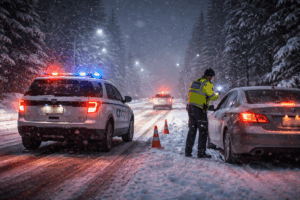
Winter weather affects the driving environment in ways that make it more difficult to assess whether someone is driving under the influence. Ice and snow create slippery conditions, while fog and reduced visibility make it harder to spot dangerous driving behavior. Even though officers rely on specific signs of impaired driving, such as weaving, erratic speeds, or failure to stop at a signal, these signs can sometimes be misinterpreted when road conditions are less than ideal.
When weather conditions deteriorate, the signs of impairment become more difficult to distinguish from signs of poor driving due to environmental factors. This increases the complexity of DUI stops during the winter months. For example, a driver who is struggling to control their vehicle on icy roads might appear to be impaired, even if they are sober. Similarly, slow reactions or difficulty following road signs could be attributed to both alcohol or drug impairment and slippery conditions.
Slippery Roads and Reduced Control
Driving on slick roads can cause even the most skilled drivers to struggle with vehicle control, especially when stopping, turning, or accelerating. This becomes a significant factor when officers observe behavior that suggests impaired driving. For example, a driver might appear to be swerving or making wide turns because they are trying to maintain control on icy roads, rather than because they are under the influence of alcohol or drugs.
Just like anything else, practice leads to proficiency. With over 35 years of combined experience, we've gathered extensive knowledge inside and outside the courtroom.

Officers need to make a distinction between drivers who are struggling due to the weather and those who are impaired. However, the lines are often blurred in winter conditions, especially when drivers are nervous or unfamiliar with driving in snow or ice. When these conditions are at their worst, the likelihood of erratic behavior increases for everyone on the road.
Field Sobriety Tests and Winter Weather
Field sobriety tests (FSTs) are commonly used by law enforcement to assess whether a driver is impaired. These tests require drivers to perform a series of physical activities that can demonstrate motor skills, balance, and coordination. In winter weather, these tests can be problematic for two reasons.
First, snow and ice make it dangerous to perform tests such as walking in a straight line or standing on one leg. Even sober drivers may have difficulty maintaining balance, and the risk of slipping or falling increases under these conditions. Second, freezing temperatures can make it difficult for drivers to function at their best. With the body’s muscles stiffened by the cold, completing the tasks required in a field sobriety test becomes even more challenging. This can lead to false conclusions about a driver’s impairment when the struggle is simply due to the environment.
Breathalyzer Challenges in Winter
Breathalyzer tests are a crucial part of DUI detection. However, winter weather presents some obstacles that can interfere with the accuracy of these tests. Cold temperatures can affect how the breathalyzer operates. In some cases, freezing conditions can lead to condensation inside the device, which can potentially alter the readings.
Furthermore, fogged-up breathalyzer tubes or issues with calibration may result in inaccurate blood alcohol concentration (BAC) readings. While law enforcement officers typically ensure that the equipment is properly maintained, extreme winter conditions might lead to issues that complicate the process of obtaining accurate results. Given these challenges, officers need to rely on more than just the results of a breathalyzer test to make their determination.
Collin McCallin performed EXCELLENTLY with my case. He kept in consistent contact with me throughout and showed diligence and extreme care for what I was dealing with. He worked effectively with the district attorney to resolve my case, and I could not be more pleased with the work. Thanks again! - Tim W Working with Russell lifted a huge weight off of our shoulders and allowed my husband and me to get back to living our lives knowing we were in good hands. Russell is truly a genuine and caring person and my husband and I will forever be grateful for the hard work, empathy, and support Russell gave us with my case. His persistence and determination resulted in a full dismissal of all of the charges!" - AnonymousExcellent Attorney
The Best Choice
Visibility and Winter Weather
One of the key challenges during winter DUI stops is the reduced visibility that comes with weather conditions such as snowstorms, fog, and rain. Poor visibility makes it difficult for officers to assess a driver’s actions and the vehicle’s movements clearly. Additionally, it can make it harder for both officers and drivers to stay safe during the stop.
A snowstorm can quickly obscure a driver’s ability to see the road clearly, causing them to make erratic movements in an attempt to stay on course. Similarly, officers conducting a stop may find it difficult to properly evaluate a driver’s behavior when they are struggling to see through the snow or fog themselves. This can lead to confusion and misjudgments, as the reduced visibility limits the officer’s ability to make an informed decision.
Officer Safety and Winter Conditions
Winter conditions not only complicate the task of detecting impaired driving, but they also create additional safety concerns for officers conducting DUI stops. Icy roads and slippery conditions put officers at risk when they approach vehicles during a stop. Officers must carefully navigate through difficult terrain to avoid injury.
In some cases, officers may choose to remain inside their vehicles during a DUI stop if the conditions outside are too dangerous. If road conditions are particularly bad, officers might call for backup to ensure that the stop can be conducted safely. Drivers should also be aware of these challenges and follow officers’ instructions carefully to avoid additional risks during a stop.
DUI Laws and Winter Driving
Despite the added complexities that winter weather presents during DUI stops, DUI laws remain firmly in place. Regardless of weather conditions, the law treats driving under the influence with zero tolerance. It is essential for drivers to understand that road conditions, while challenging, do not excuse impairment.
For those who are impaired, being involved in a DUI stop during winter conditions can result in serious legal consequences. In addition to the standard penalties for DUI offenses, winter driving conditions can complicate your defense if you find yourself in a situation where you are charged with impaired driving.
The Role of DUI Lawyers in Winter DUI Cases
If you are facing a DUI charge during the winter months, it is important to consult with a lawyer who is experienced in handling these types of cases. Winter DUI cases can be more complicated because of the additional factors involved, including road conditions, impaired judgment due to the weather, and the challenges of accurately conducting DUI tests in cold and slippery conditions.
At Hebets & McCallin P.C., we specialize in defending clients who face DUI charges in Denver and surrounding areas. Our team understands the unique challenges that winter DUI stops present, and we will use that knowledge to help ensure that your rights are protected. If you are dealing with a DUI charge in the winter, don’t hesitate to reach out to our office for a consultation.
Winter weather conditions present a unique set of challenges for both law enforcement officers and drivers during DUI stops. Slippery roads, reduced visibility, and difficult testing conditions make it harder to detect impairment and increase the risk of accidents. For drivers, it is essential to understand that DUI laws apply year-round, regardless of the weather. Officers must adapt to the challenges posed by winter conditions, but they are still required to enforce the law.
If you are involved in a DUI stop during the winter months, contact Hebets & McCallin P.C. to ensure that you receive expert legal representation. Our team is equipped to handle the complexities of winter DUI cases and will work to protect your rights every step of the way.
To learn more about this subject click here: Winter Roads and DUI Stops: How Cold Weather Affects Colorado DUI Cases